

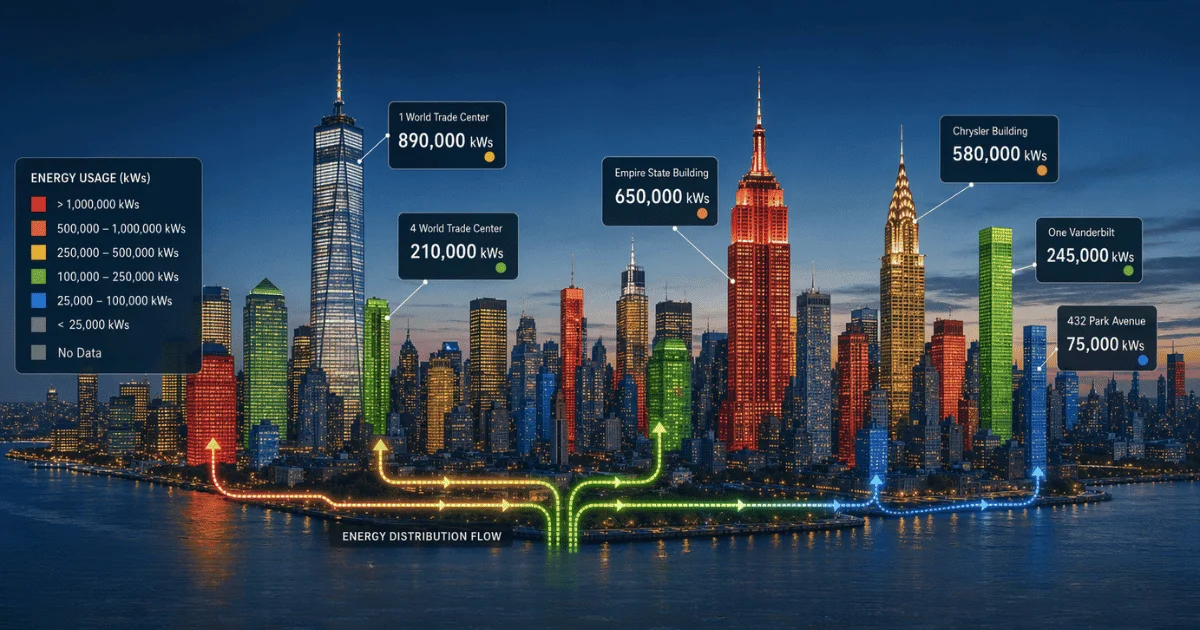
Las Normas de Desempeño de Edificios ahora conllevan un riesgo financiero real, con ciudades como Nueva York, Boston y Seattle imponiendo límites de emisiones a través de LL97, BERDO y BEPS. Esta guía cubre el panorama de cumplimiento de 2026, los plazos clave y tres pasos para prepararse.
Una cartera de oficinas de 500,000 pies cuadrados en Nueva York podría enfrentar más de $1 millón en multas anuales bajo la NYC LL97, y la mayoría de los propietarios aún desconoce su nivel de exposición.
Ese es el cambio que está ocurriendo ahora mismo, con los Estándares de rendimiento de edificios pasando de las discusiones políticas a una aplicación rigurosa. Durante años, la evaluación comparativa energética y los informes de sostenibilidad se trataron como iniciativas a largo plazo. Eran importantes, pero rara vez se sentían urgentes. En 2026, eso cambia. Los plazos son inminentes, las sanciones son reales y el cumplimiento se está convirtiendo en un requisito operativo en lugar de algo estratégico pero aplazable.
Para los propietarios de edificios, gestores de carteras y directores financieros, el riesgo ya no es abstracto. Es financiero, cuantificable y, en muchos casos, ya está en marcha. El mayor problema no es que a los propietarios no les importe el rendimiento energético, sino que la mayoría no tiene una visión clara y centralizada de la situación de sus edificios, qué normativas se aplican o qué tan cerca están de incumplir los requisitos.
Si no tiene una visibilidad clara de su exposición, ya está en desventaja.
Los BPS se están expandiendo rápidamente por todo EE. UU., con más de 40 ciudades adoptando políticas que exigen que los edificios cumplan con objetivos definidos de energía o emisiones a lo largo del tiempo. Lo que comenzó como una evaluación comparativa ha evolucionado hacia una regulación de rendimiento ejecutable.
El impacto financiero ya es evidente en los principales mercados:
En la práctica, estas cifras aumentan rápidamente. Un edificio de oficinas grande que supere su límite de emisiones por unos pocos miles de toneladas métricas podría enfrentar multas anuales de cientos de miles de dólares. Para carteras más grandes, esa exposición se acumula entre edificios y a lo largo de los años. Las multas diarias en ciudades como la BERDO de Boston pueden alcanzar cifras de seis dígitos en un solo período de cumplimiento si los problemas no se abordan a tiempo.
Al mismo tiempo, el cumplimiento es cada vez más complejo. Muchas jurisdicciones requieren una evaluación comparativa y la presentación de informes continuos a través de herramientas como el ENERGY STAR Portfolio Manager de la EPA. La precisión, la coherencia y la preparación para auditorías de los datos ya no son solo mejores prácticas internas; son parte del requisito normativo.
Estas normas no están estandarizadas. Los plazos, los umbrales y las estructuras de penalización varían según la ciudad y el tamaño del edificio, por lo que un mismo propietario puede tener edificios sujetos a cronogramas y requisitos de cumplimiento totalmente distintos según su ubicación. Lo que antes era una tarea de presentación de informes anuales se está convirtiendo cada vez más en un proceso continuo y de múltiples niveles.

A estas alturas, las normas de rendimiento de edificios (BPS) no son solo una iniciativa de sostenibilidad. Son un factor directo que influye en los ingresos operativos, el valor de los activos y el riesgo de la cartera.
El impacto más inmediato se refleja en los ingresos operativos netos. Las penalizaciones no son abstractas ni afectan solo a la reputación; son costes directos que reducen los ingresos operativos, al igual que lo hacen el aumento de las tarifas de servicios públicos o los gastos de mantenimiento imprevistos. Para los edificios que incumplen sistemáticamente los objetivos de emisiones, esos costes se vuelven recurrentes y significativos.
Más allá de las sanciones, el cumplimiento normativo influye cada vez más en la valoración de los edificios. Los inversores y prestamistas prestan mucha más atención a la exposición regulatoria, especialmente en mercados donde la aplicación de la ley ya está en marcha. Un edificio que no cumple con la normativa o que requiere mejoras importantes para alcanzar los estándares futuros puede considerarse un activo de mayor riesgo, lo que afecta tanto a su valoración como a la estrategia a largo plazo.
También existe un coste operativo que a menudo se subestima. Gestionar el cumplimiento en varios edificios requiere realizar un seguimiento de los plazos, mantener informes precisos y coordinar datos entre sistemas que no fueron diseñados para trabajar juntos. Para muchos equipos, esto añade un nivel de complejidad que no existía hace unos años.
Por último, las normas de edificación introducen presión en la toma de decisiones. Los propietarios se ven obligados a tomar decisiones de inversión de capital en plazos muy ajustados, a menudo sin una visión clara de qué mejoras tendrán mayor impacto. Sin esa claridad, existe el riesgo de invertir demasiado en las áreas equivocadas o de retrasar la acción hasta que el cumplimiento se vuelva urgente.
En conjunto, estos factores transforman las normas de edificación de una consideración de sostenibilidad a largo plazo en una preocupación empresarial inmediata. La pregunta ya no es si sus edificios deberán cumplir con la normativa, sino cómo ese cumplimiento afectará al rendimiento financiero y a la toma de decisiones en toda su cartera.
La mayoría de los propietarios no necesitan más información sobre las normas de edificación. Necesitan una forma clara de actuar al respecto. Un enfoque práctico para el cumplimiento se reduce a tres pasos: identificar su exposición, validar sus datos y generar visibilidad en todos sus edificios.
El primer paso es comprender cuáles de sus edificios están sujetos a los requisitos de BPS y cuáles son exactamente esos requisitos.
La cobertura viene determinada por los umbrales de superficie y las normas específicas de cada ciudad. Por ejemplo, Seattle suele regular los edificios de más de 20.000 pies cuadrados, mientras que Denver incluye edificios de tan solo 5.000 pies cuadrados. Nueva York y Boston aplican sus propios umbrales y plazos, cada uno con diferentes expectativas de cumplimiento.
Mapear sus edificios frente a estos requisitos crea una base de referencia clara. Le permite identificar qué activos están expuestos, qué plazos se acercan y dónde podrían surgir posibles sanciones. En la práctica, muchos propietarios no tienen esta información consolidada. Los edificios se evalúan individualmente, en lugar de como parte de una cartera. Sin esa visión a nivel de cartera, resulta difícil priorizar las inversiones o planificar de forma proactiva.
Una vez que comprenda dónde está expuesto, la siguiente pregunta es si sus datos pueden respaldar el cumplimiento. La mayoría de las políticas de BPS dependen de la evaluación comparativa y la presentación de informes a través de EPA ENERGY STAR Portfolio Manager. Esto hace que la calidad de los datos sea un requisito fundamental, no una función de apoyo.
Los problemas comunes incluyen datos de servicios públicos incompletos, formatos de informes inconsistentes y procesos manuales que introducen errores. Es posible que estas brechas no sean obvias internamente, pero se vuelven críticas cuando los datos se revisan o auditan. También es importante reconocer que las mejoras en el rendimiento por sí solas no son suficientes. Un edificio puede reducir el consumo de energía y aun así enfrentar riesgos de cumplimiento si los informes son inexactos o incompletos.
En esta etapa, el objetivo no es la optimización. Es la confianza. Necesita saber que sus datos reflejan con precisión el rendimiento de sus edificios.
El paso final es pasar de un seguimiento fragmentado a una visión centralizada del rendimiento y el cumplimiento. Gestionar varios edificios en múltiples jurisdicciones introduce una complejidad difícil de manejar con hojas de cálculo o sistemas desconectados. Está realizando un seguimiento de diferentes plazos, métricas y requisitos de informes, a menudo a través de equipos y herramientas que nunca fueron diseñados para trabajar juntos.
Sin una única fuente de información, la visibilidad se pierde. Eso conduce a decisiones retrasadas, plazos incumplidos y un mayor riesgo de cumplimiento. Las plataformas centralizadas abordan esto consolidando el rendimiento, los informes y el seguimiento del cumplimiento en un solo lugar. Sistemas de gestión energética (EMS) como E360 se integran sobre los sistemas de construcción existentes y consolidan los datos en una vista unificada, lo que permite a los propietarios y operadores monitorear el rendimiento en tiempo real y actuar con mayor antelación.
A gran escala, el cumplimiento no consiste en realizar un seguimiento de más datos. Se trata de tener la claridad necesaria para tomar decisiones antes de que los problemas se vuelvan urgentes.

2026 es solo el comienzo. Los requisitos de BPS seguirán endureciéndose durante los próximos años.
En Nueva York, el segundo período de cumplimiento para NYC LL97 reducirá los límites de emisiones en aproximadamente un 82 por ciento. Para muchos edificios, esto crea una brecha significativa entre el rendimiento actual y los requisitos de la siguiente fase de aplicación. Otras ciudades ya se están moviendo en la misma dirección, y muchas políticas de BPS se están basando en el marco de Nueva York. Eso significa límites más estrictos, mecanismos de aplicación más claros y mayores consecuencias financieras con el paso del tiempo.
Al mismo tiempo, existe una creciente alineación sobre cómo se mide el rendimiento de los edificios. Una de las métricas más comunes es la Intensidad de uso de energía (EUI), que mide cuánta energía utiliza un edificio por pie cuadrado durante un período determinado. Permite a los reguladores comparar edificios de diferentes tamaños y tipos utilizando un punto de referencia estandarizado. Para los propietarios, se convierte en un indicador clave de si un edificio está funcionando de manera eficiente en relación con sus pares.
A medida que el EUI y otras métricas similares se vuelven fundamentales para el cumplimiento normativo, las expectativas sobre la calidad de los datos y la elaboración de informes seguirán aumentando. La tendencia general es clara: el cumplimiento se está volviendo más basado en datos, más estandarizado y más visible para las partes interesadas externas. Inversores, inquilinos y reguladores están poniendo un mayor énfasis en la transparencia del rendimiento.
Lo que está ocurriendo hoy en Nueva York no es un caso aislado. Es una señal temprana de hacia dónde se dirigen otros mercados.

El BPS en 2026 no se trata solo de eficiencia energética. Se trata de mantener el control sobre el rendimiento de sus edificios y cómo su cartera es gestionada.
Los propietarios que comprenden su nivel de exposición, mantienen datos fiables y logran visibilidad en todos sus edificios estarán mejor posicionados para gestionar el cumplimiento y proteger el valor de sus activos a largo plazo. Aquellos que no lo hagan podrían verse obligados a tomar decisiones bajo presión a medida que se acerquen los plazos.
Para dar el siguiente paso, explore la Base de datos BPS de Sanalife para obtener un desglose completo de las normativas, los plazos y las estrategias de cumplimiento en las principales ciudades. También puede descargar la Guía de cumplimiento BPS 2026 estado por estado para obtener una referencia clara, ciudad por ciudad, que podrá utilizar en toda su cartera. Ambos recursos están diseñados para ayudarle a pasar de la comprensión de las normas a la acción.
Avance con información mensual sobre la administración de la energía, el monitoreo en tiempo real, las estrategias de respuesta a la demanda y la automatización inteligente de edificios.


Brindamos soluciones innovadoras de administración de energía, respuesta a la demanda y automatización de edificios a los sectores empresarial, manufacturero, industrial, sanitario, hotelero, K-12 y educación superior en los Estados Unidos y en todo el mundo.
©2025 InTech Energy, Inc. DBA Sanalife. Todos los derechos reservados. Varias marcas comerciales pertenecen a sus respectivos propietarios.