

PJM capacity auction costs surged from 2.2 billion dollars to 16.1 billion dollars in two years as eleven governors threaten to leave the grid operator. This article explains the crisis and why facility managers need an energy strategy now.
Remember when we told you the PJM grid was at a breaking point? Well, buckle up because what was a crisis is now a full-blown energy standoff, and your facility's bottom line is caught in the crossfire.
Last month, eleven state governors gathered in Philadelphia and did something unprecedented in PJM's 98-year history: they publicly called out the grid operator, demanded sweeping changes, and threatened to walk away entirely. Pennsylvania Governor Josh Shapiro didn't mince words, "We need states to have more of a say in how PJM operates... If PJM cannot do that, then Pennsylvania will look to go it alone."
This isn't political theater. This is what happens when data centers trigger a $16.1 billion capacity auction, up from $2.2 billion just two years ago, and everyone realizes the electricity grid just became your newest business risk.
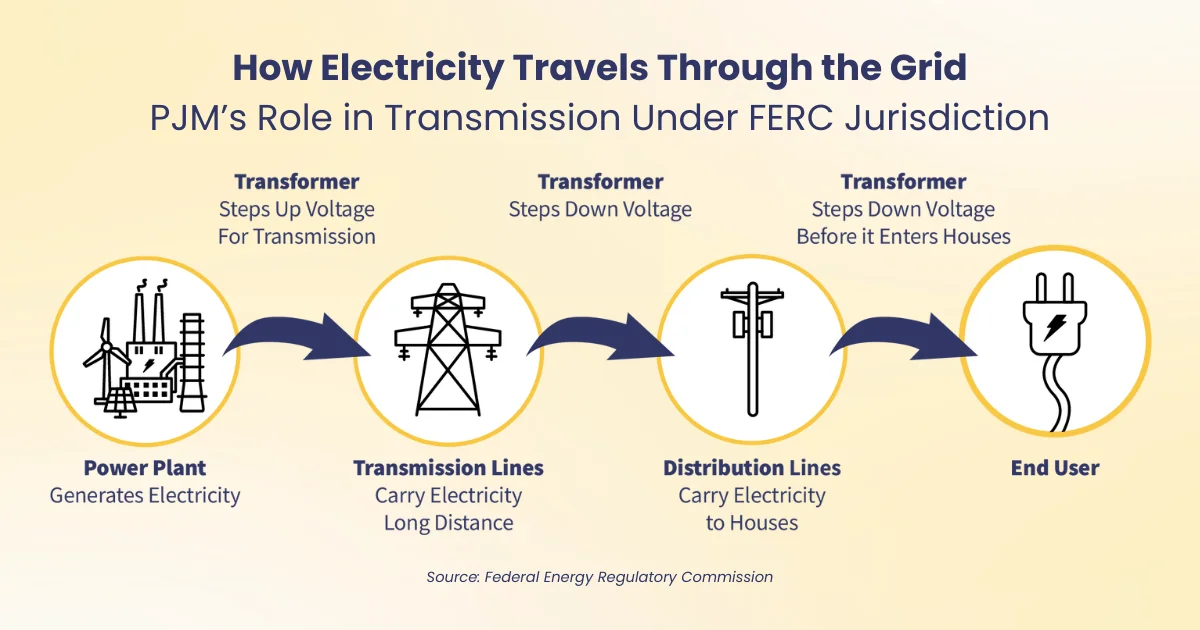
In our previous analysis, we warned that PJM's 2026/27 capacity auction hit $329.17/MW-day, a 22% jump that represented a 1,000% increase over just two years. The math was brutal, businesses across 13 states faced electricity bill increases between 1%-5% minimum, with projections showing residential and commercial rates could spike 30-60% by 2030.
The culprit? AI-driven data centers are demanding 32 GW of additional capacity by 2030, with approximately 30 GW coming from data centers alone. Meanwhile, renewable energy projects sit in PJM's interconnection queue for years, unable to come online fast enough to meet demand.
Here's where things get interesting and messy. The Union of Concerned Scientists found that ratepayers in seven data-center-friendly states were charged $4.4 billion for transmission upgrades that data centers require.
But here's the plot twist that should make every facility manager sit up, estimates suggest 75-90% of data center load requests will amount to nothing. A single tech company might submit applications for three different locations before securing land, building only one facility, but ratepayers still foot the bill for capacity planning that accounts for all three phantom projects.
Monitoring Analytics, PJM's independent watchdog, called this "extreme uncertainty in load forecasts" an "unprecedented situation" that demands immediate reform. The Natural Resources Defense Council (NRDC) has both suggested PJM adopt a "bring your own generation" system, requiring electricity-hungry customers like data centers to build their own power sources upfront rather than draining grid resources.
To PJM's credit, they're not ignoring the crisis. In August, the PJM Board of Managers invoked the Critical Issue Fast Path (CIFP), an accelerated decision-making method designed to tackle major issues with federal implementation deadlines. PJM kicked off this initiative in October, seeking stakeholder consensus on how to integrate large loads rapidly without risking supply shortages.
PJM is caught between a rock and a hard place. They didn't create the data center boom. They didn't force renewable energy projects to languish in interconnection queues for years. And they certainly didn't ask states like Pennsylvania, Virginia, Ohio, and New Jersey to aggressively court AI and data center investment without considering the grid infrastructure implications.
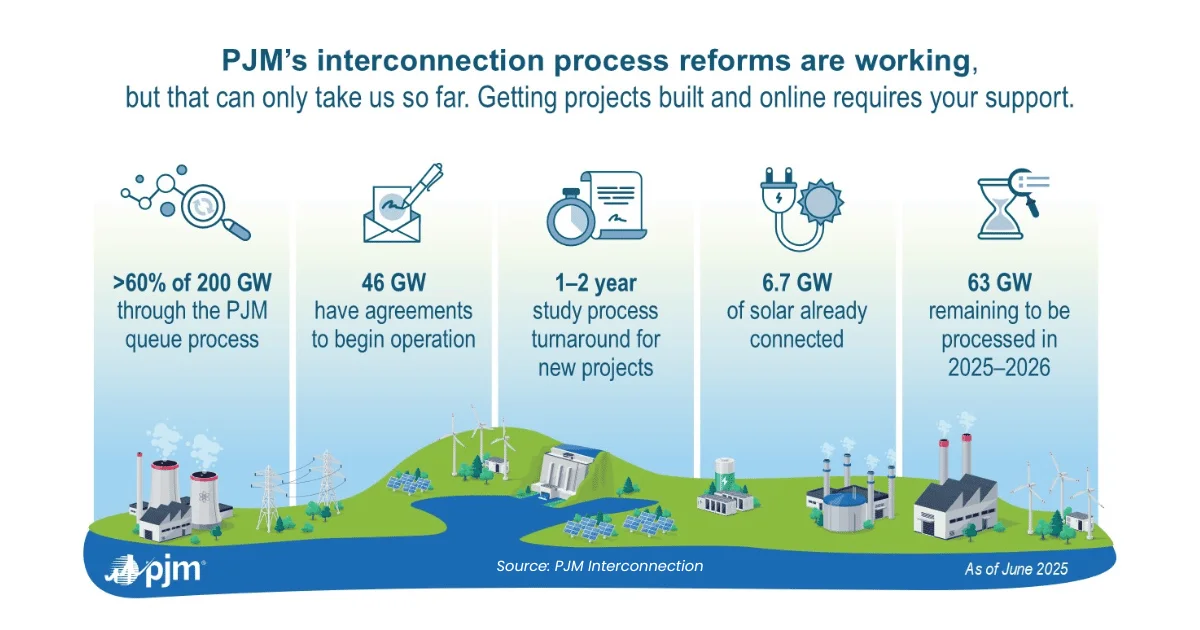
PJM has processed almost 140 GW of generation interconnection projects since 2023, and they're racing to clear the remaining 63 GW of queued projects by 2026. The grid operator is doing what it can within its authority, but data center electricity demand is projected to rise 22% in 2025 and nearly triple by 2030, a pace that would test any infrastructure system on the planet.

If you're managing a manufacturing plant, industrial facility, commercial building, or hospitality operation in PJM territory, here's what you need to understand, as a commercial and industrial ratepayer, you're subsidizing Big Tech's AI ambitions, and your energy costs are only going one direction, up.
Your facility didn't ask for this. You're not building data centers. But when PJM's capacity auction results show that data centers account for over 90% of new demand by the decade's end, and PJM committed nearly 100% of offered supply to meet projected needs in the latest auction, you're paying for grid upgrades and capacity premiums whether you like it or not.
The recent capacity auction included just 139 MW over the projected reliability requirement; that's an uncomfortably thin margin. As Robert Routh, Pennsylvania policy director of NRDC, noted, PJM wasn't prepared for the sheer volume of interconnection requests, particularly from smaller renewable projects that don't follow the standardized process of large fossil fuel plants.
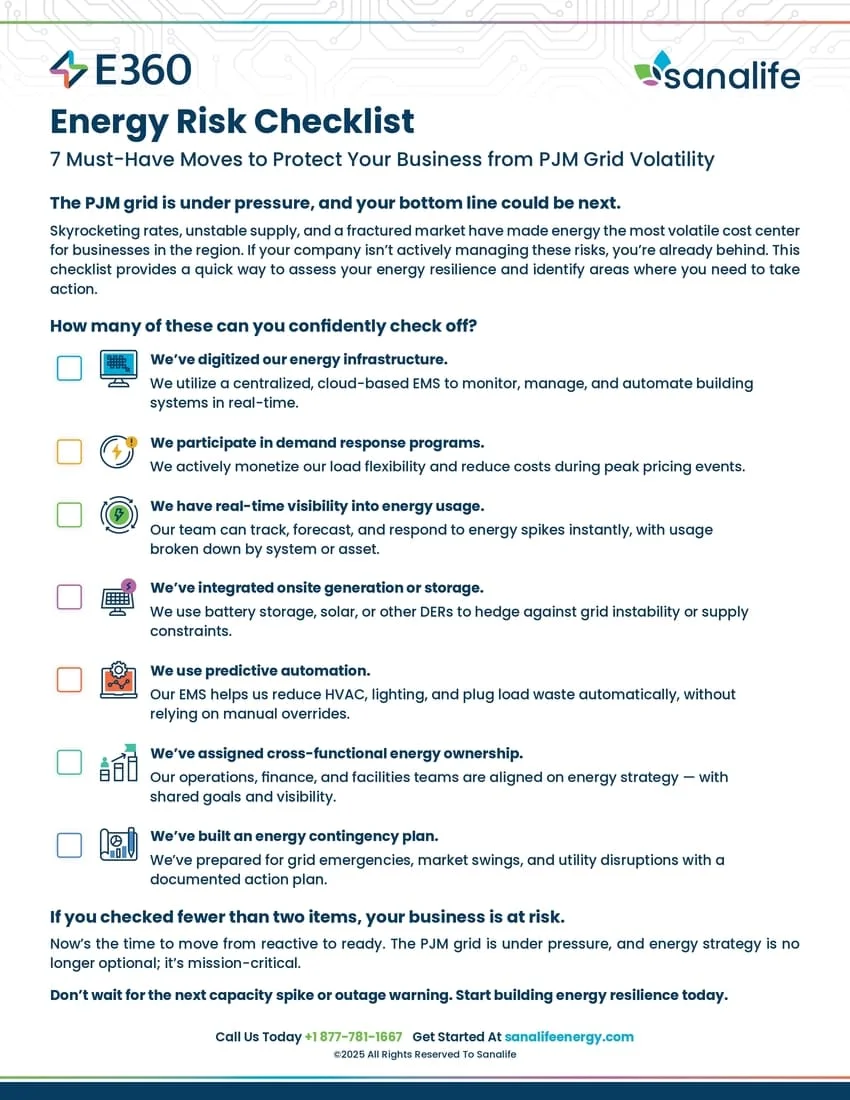
Let's cut through the noise. If you don't have a sophisticated energy management strategy in 2025, you're not just behind, you're hemorrhaging money.
The grid isn't getting more stable. Electricity prices aren't coming down. And waiting for PJM, state governments, or the federal government to solve this crisis for you is a losing bet. Even if PJM's Critical Issue Fast Path process results in a FERC filing by December, those reforms won't be implemented until the 2028/2029 capacity auction scheduled for June 2026.
That's two more years of escalating costs while facility managers scramble to control what they can.
Here's what forward-thinking energy managers are doing right now:
Cloud-based Energy Management Systems (EMS) integrate HVAC, lighting, and plug loads into centralized platforms that enable real-time visibility and control. Facilities implementing smart energy strategies are seeing HVAC consumption reductions up to 50% and plug-load reductions of 30%.
PJM has nearly 8 GW of demand response under contract, and FERC's approval to dispatch these resources 24/7 means businesses can monetize flexibility. Manufacturers across all industries are leveraging demand response to reduce load during peak events, earning financial incentives while supporting grid stability.
Whether through battery storage, distributed energy resources (DERs), or onsite renewable generation, facilities with dispatchable or shiftable power sources strengthen resilience against both price volatility and potential supply disruptions.
Building Energy Management Systems (BEMS) provide monitoring and control capabilities that enable facility managers to identify inefficiencies, prioritize savings opportunities, and perform capacity planning based on historical trends.
Facility managers are increasingly focused on sustainability and energy efficiency, not just for ESG compliance, but because smart energy management directly impacts the bottom line. Regular energy audits identify areas where facilities waste energy, from outdated lighting and underperforming HVAC units to poor insulation.
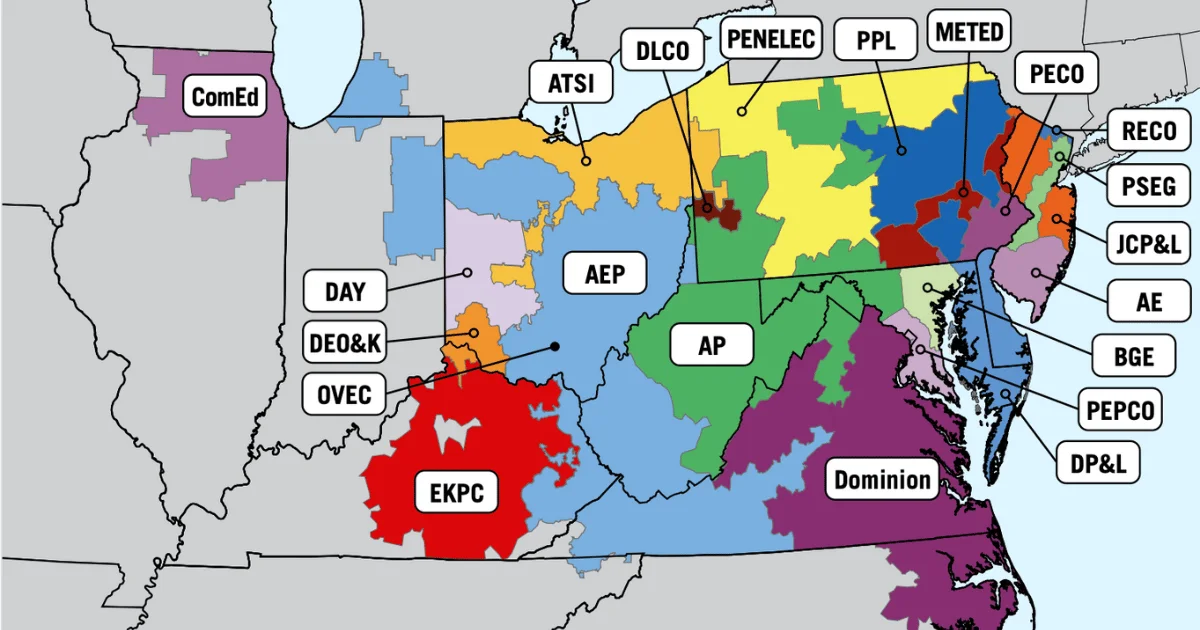
The days of treating energy as a background utility cost are over. In the PJM region covering 65 million customers across Pennsylvania, New Jersey, Maryland, Delaware, Virginia, West Virginia, Ohio, Illinois, Indiana, Kentucky, Michigan, North Carolina, Tennessee, and the District of Columbia, energy volatility is the new normal.
Governors are grappling with potentially leaving the grid. Tech companies with ironclad commitments to clean energy are adding fossil fuels to meet data center demand. And PJM's scenario analysis indicates that even with new generation, no further deactivations, and additional demand response, there may still be unmet demand by 2030.
This isn't a drill. This isn't speculation. This is the energy crisis you're operating in right now.
The question isn't whether you'll face higher electricity costs; that's already baked into the next several years of capacity auctions. The question is whether you'll have the systems, strategies, and intelligence in place to navigate this volatility without letting it crush your operational efficiency and profitability.
PJM is doing what it can. States are demanding reforms. While policymakers argue over jurisdiction and responsibility, your facility's energy bills keep climbing, and waiting for someone else to fix this problem is a luxury you can't afford.
The facilities that thrive in this environment won't be the ones hoping for stability. They'll be the ones who built resilience, flexibility, and intelligence into their energy operations before the next crisis hits.
Is yours one of them?
Subscribe to Sanalife Energy's newsletter for top industry insights, trends, and news.


We deliver innovative energy management, demand response, and building automation solutions to enterprise, manufacturing, industrial, healthcare, hospitality, K-12, and higher education sectors across the United States and globally.
©2026 InTech Energy, Inc. DBA Sanalife. All rights reserved. Various trademarks held by their respective owners.