ASHRAE Standard 62.1 sets minimum ventilation and indoor air quality requirements for commercial and institutional buildings. It covers how much outdoor air each space gets, how contaminants are controlled, and how air moves through the building. You can comply through one of three procedures: Ventilation Rate, IAQ, or Natural Ventilation. Code adoption varies by location, so confirm which edition applies to your building.
ASHRAE Standard 62.1 sets the minimum ventilation a commercial building needs to keep indoor air acceptable. The American Society of Heating, Refrigerating and Air-Conditioning Engineers (ASHRAE) publishes it, and engineers use it to size outdoor air supply, control contaminants, and lay out air distribution. This guide explains what the standard covers, the three ways to comply, and where air quality and energy use pull against each other.
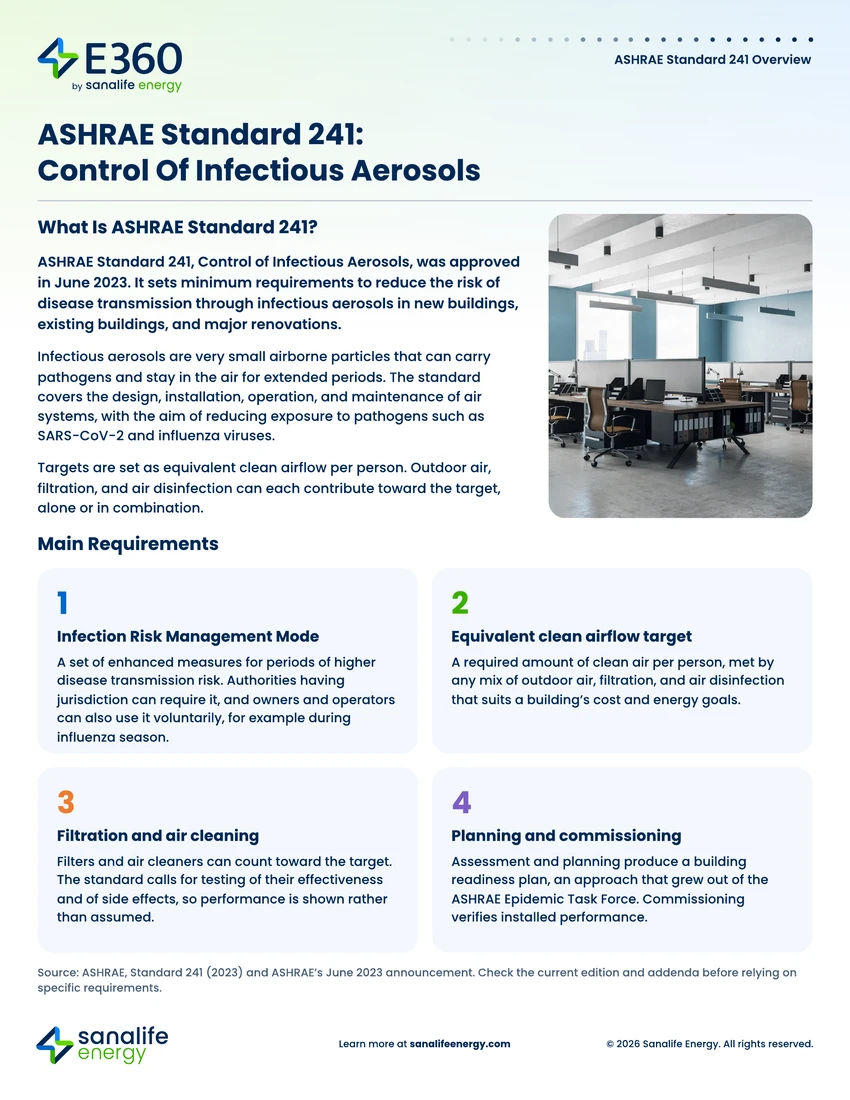
Looking for infection control guidance? That is ASHRAE Standard 241. Read our overview: ASHRAE 241: Empowering Healthier Indoor Environments.
ASHRAE Standard 62.1 is a set of requirements for designing and operating ventilation systems in commercial and institutional buildings. ASHRAE updates it periodically. It sets minimum ventilation rates, contaminant control measures, and air distribution practices so occupants get acceptable indoor air without the building wasting energy.

The standard addresses three areas of ventilation design.

The standard gives you three procedures. Most projects use the first one.

Whichever path you pick, compliance comes from design and operation together. Size the system to the required rates, control pollution at the source, and keep checking performance after people move in. Indoor air quality monitoring shows whether the design works in practice and where to tune it.
ASHRAE publishes 62.1 as a voluntary consensus standard. It becomes enforceable when a building code or local authority adopts it. Some jurisdictions reference it through their mechanical or building codes, and the edition that applies depends on where the building sits and when it was permitted. Confirm with your local code official or a licensed mechanical engineer before you rely on any single edition.

Meeting 62.1 takes design effort, and the cost shows up most in larger or more complex buildings. Air quality and energy goals also work against each other, because more outdoor air usually means more energy to condition it. Demand-controlled ventilation, energy recovery, and ongoing monitoring help balance the two. Work through the tradeoffs with a licensed mechanical engineer.
ASHRAE Standard 62.1 is a set of requirements for ventilation in commercial and institutional buildings. It sets minimum outdoor air rates, contaminant control measures, and air distribution practices so occupants get acceptable indoor air while the building avoids wasting energy.
Pick one of three procedures: the Ventilation Rate Procedure (prescriptive, based on space type), the IAQ Procedure (performance-based, with limits on specific contaminants), or the Natural Ventilation Procedure (for spaces served by operable openings). A licensed mechanical engineer can tell you which one fits your building.
ASHRAE publishes it as a voluntary standard. It becomes enforceable where a building code or local authority adopts it, and the edition that applies depends on your jurisdiction and permit date. Confirm with your local code official.
You get better indoor air, less energy waste through strategies like demand-controlled ventilation, more comfortable spaces, and fewer surprises at permitting and inspection where the standard is adopted.
Standard 62.1 comes down to getting the right amount of fresh air to the right places without wasting energy. If you manage a building, start by confirming which edition your jurisdiction uses, then compare it against how your current system performs.
Subscribe to Sanalife Energy's newsletter for top industry insights, trends, and news.


We deliver innovative energy management, demand response, and building automation solutions to enterprise, manufacturing, industrial, healthcare, hospitality, K-12, and higher education sectors across the United States and globally.
©2026 InTech Energy, Inc. DBA Sanalife Energy. All rights reserved. Various trademarks held by their respective owners.