


Ann Arbor's Energy and Water Benchmarking Ordinance requires commercial and multifamily buildings to track energy and water use as part of the citywide Building Performance Standard coalition. This guide covers compliance deadlines and strategies to meet ordinance targets and cut utility costs.
This article delves into Ann Arbor's Energy and Water Benchmarking Ordinance, part of the Building Performance Standard coalition, that mandates enhanced energy efficiency and emissions reductions in commercial and multifamily buildings. It outlines compliance requirements, deadlines, and benefits of adherence, such as reduced utility costs and improved operational efficiency. The blog also explores technological solutions like Sanalife’s E360 software and highlights local resources and incentives to assist businesses. Through success stories and FAQs, the article equips businesses with actionable strategies to meet ordinance targets and contribute to Ann Arbor's sustainable future.
As part of the Building Performance Standard (BPS) coalition, Ann Arbor, Michigan, has taken a proactive step toward sustainability with the implementation of the Energy and Water Benchmarking Ordinance. This move not only reflects Ann Arbor’s dedication to reducing energy consumption and greenhouse gas emissions but also underscores its commitment to fostering a sustainable environment for future generations. The ordinance enforces specific performance requirements for commercial and multifamily buildings, aiming to significantly enhance energy efficiency, promote electrification, and improve water management. But what does this mean for your business, and how can you successfully meet these requirements?
Ann Arbor’s ordinance is designed to streamline energy and water management across buildings, mandating more efficient use of resources while reducing environmental impact. With clearly defined benchmarks for performance in energy and water use, the ordinance seeks to cut down on greenhouse gas emissions while driving sustainable building practices. Through this initiative, Ann Arbor aims to set a benchmark for other cities participating in the Building Performance Standard (BPS) coalition.
To meet the ordinance's goals, buildings must adhere to specific performance targets. For energy use, this could mean achieving a specified energy use intensity (EUI) by a set date. Similarly, water efficiency standards require reductions in water consumption over time. Crucially, the ordinance comes with clear deadlines achieving targets by 2030 and ultimately by 2050 with interim milestones set for progress assessment. Failing to comply may lead to penalties, although there are alternative compliance paths for those willing to make substantial changes.
Complying with Ann Arbor’s benchmarking ordinance offers numerous benefits:
By reducing energy and water usage, buildings contribute to lower emissions and a reduced carbon footprint, aligning with broader climate action goals.
Greater energy efficiency and water conservation translate into significant utility cost savings. Additionally, properties that meet the ordinance standards often see enhanced value.
Buildings that optimize their energy and water usage typically experience improved operational performance and occupant comfort.
Demonstrating a commitment to sustainability can improve a business's market image, attracting environmentally conscious customers and partners.

Navigating compliance requires a strategic approach. Here’s how your business can start:
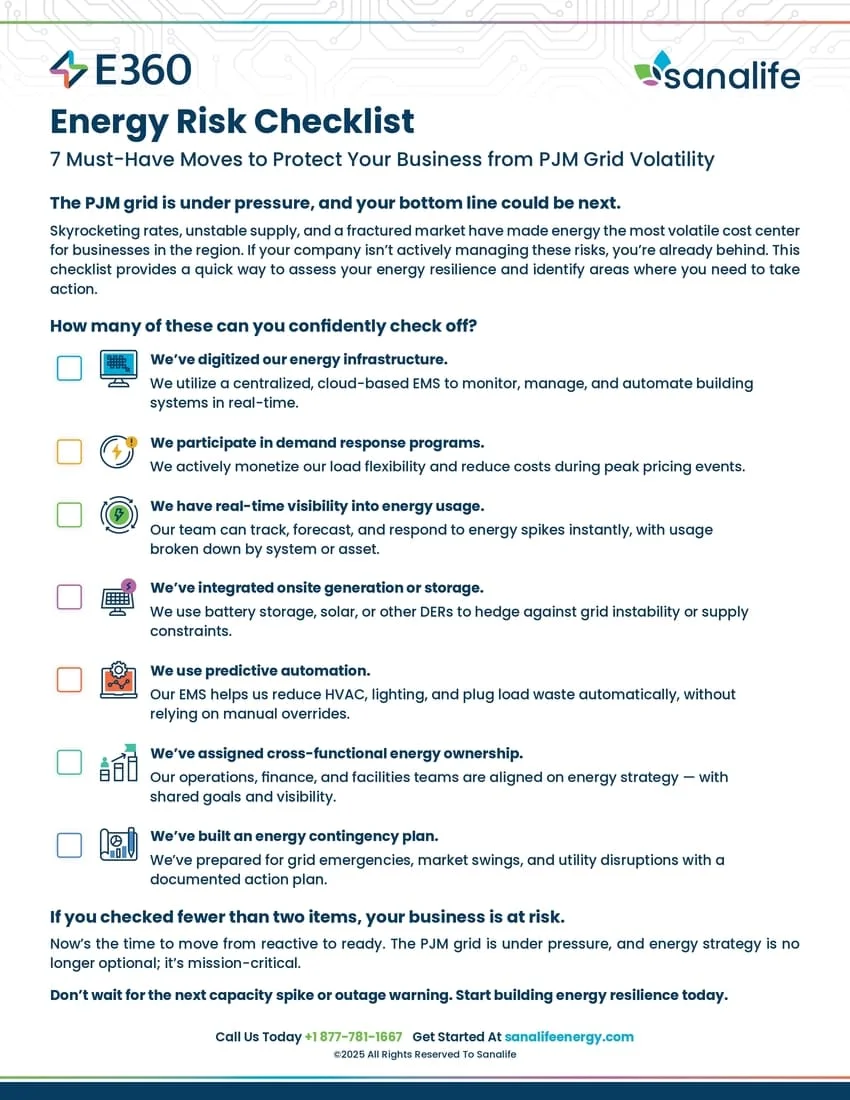
Technology is pivotal in meeting compliance efficiently. Sanalife’s E360 Energy Monitoring and Management Software can be instrumental for businesses aiming to achieve compliance. By providing real-time data and insights, E360 assists businesses in identifying energy inefficiencies and managing consumption effectively. Participation in utility Demand Response Programs further allows businesses to reduce energy costs and engage in sustainable practices. Are you leveraging cutting-edge technology to enhance compliance efforts?
Ann Arbor extends a variety of resources to support local businesses in achieving compliance. These include government initiatives, partnerships with local energy consultants, and access to workshops. Additionally, businesses can benefit from financial incentives such as tax credits, rebates, and grants available through local, state, or federal programs, designed to ease the financial burden of making necessary upgrades. How can these resources and incentives smooth your compliance journey?
Learning from others provides a roadmap for success. For instance, consider a local business that transitioned to energy-efficient systems, installed renewable energy sources, and consequently reduced operating costs while enhancing environmental impact. Their compliance not only led to financial savings but also strengthened their brand reputation as a leader in sustainability. What strategies from these success stories can you apply to your business?
Compliance with the ordinance often raises questions. Here are common concerns:
The City of Ann Arbor's Energy and Water Benchmarking and Disclosure Ordinance mandates that owners of buildings exceeding 20,000 square feet report their energy and water usage annually.
Failure to comply with the ordinance can result in civil infractions. Specifically, a first offense may incur a fine of $500, with subsequent offenses attracting fines of $1,000 each, plus prosecution costs, including court fees. Additionally, knowingly submitting false benchmarking reports or data is punishable by a $500 fine, along with prosecution costs.
The ordinance does not explicitly mention grace periods or alternative compliance pathways. However, building owners seeking exemptions must complete an Exemption Request Form, providing supporting documentation for their request.
Building owners are required to submit benchmarking reports annually by June 1st. The specific data reporting requirements vary based on the building's size:
All required data must be submitted by June 1, 2025.
Understanding these key questions can guide your strategy and prevent unexpected challenges.

As sustainability becomes central, anticipate ordinance evolution. Staying informed about changes allows businesses to adapt accordingly and aligns operations with Ann Arbor’s broader climate goals. Proactively managing compliance can help position your business for long-term success. How can staying informed ensure your business remains competitive?
For businesses just starting with ordinance compliance, consider these initial steps:
By integrating energy monitoring technology, businesses can ensure continuous compliance, avoid penalties, and unlock long-term energy savings while contributing to Ann Arbor’s carbon reduction goals.
By understanding the ordinance and preparing a comprehensive compliance plan, businesses in Ann Arbor can not only meet regulatory requirements but also enjoy reduced costs, improved building performance, and a more reputable standing in the community. Are you ready to embrace this initiative and contribute to Ann Arbor’s sustainable future?


We deliver innovative energy management, demand response, and building automation solutions to enterprise, manufacturing, industrial, healthcare, hospitality, K-12, and higher education sectors across the United States and globally.
©2026 InTech Energy, Inc. DBA Sanalife. All rights reserved. Various trademarks held by their respective owners.