


Boulder's Building Performance Ordinance (BPO) sets energy efficiency and emissions requirements for commercial and multifamily buildings. This guide explains compliance deadlines and how benchmarking, retro-commissioning, and electrification keep buildings compliant.
The City of Boulder’s Building Performance Ordinance (BPO) is a key initiative designed to reduce energy consumption and greenhouse gas emissions in commercial and industrial buildings. The ordinance requires building owners to benchmark energy performance, complete efficiency upgrades, and transition to clean energy solutions.
For businesses operating in Boulder, compliance with BPO is mandatory, but it also presents opportunities to improve efficiency, lower operating costs, and enhance property value. This guide breaks down the ordinance’s requirements, deadlines, and actionable steps for achieving compliance.
Boulder’s BPO applies to commercial, industrial, and multifamily buildings that meet specific criteria. The ordinance mandates compliance based on building size:
Smaller buildings may also be subject to specific requirements if they undergo major renovations or change ownership. Understanding where your building falls within these regulations is critical to maintaining compliance.

Boulder’s BPO focuses on four primary compliance areas:

Boulder has set staggered compliance deadlines based on building size and specific upgrade requirements.
Failure to meet these deadlines can result in penalties, making it essential for building owners to plan ahead.
Start by hiring a qualified energy assessor to evaluate your building’s energy performance. This assessment will highlight areas for improvement and help you develop an efficiency upgrade plan.
To meet BPO requirements, building owners should:
Energy benchmarking is a core requirement of the ordinance. Property owners must submit their annual energy use data to the city through the ENERGY STAR Portfolio Manager.
Retro-commissioning ensures that building systems operate efficiently. This process helps reduce unnecessary energy waste and identifies additional efficiency opportunities.

Boulder’s long-term goals emphasize moving away from fossil fuels. Building owners should consider:
Electrification not only meets compliance but also future-proofs buildings against rising energy costs and stricter emissions regulations.
Buildings can participate in demand response programs that help reduce peak electricity demand. These programs offer financial incentives to businesses that shift energy use during high-demand periods.
Financial Incentives and Support for Compliance
Boulder provides several financial assistance programs to help businesses comply with BPO, including:
Exploring these incentives can help offset compliance costs and maximize energy savings.

Beyond meeting regulatory requirements, complying with Boulder’s BPO provides tangible business benefits:
Energy-efficient buildings consume less power, reducing monthly expenses.
Energy-efficient and compliant buildings attract higher-value tenants and buyers.
Avoid costly penalties and future-proof your building against new sustainability mandates.
Demonstrating environmental responsibility strengthens corporate branding and investor confidence.
With compliance deadlines in place, building owners must take immediate steps to meet Boulder’s energy efficiency requirements.
Acting now ensures compliance, energy savings, and improved building performance.
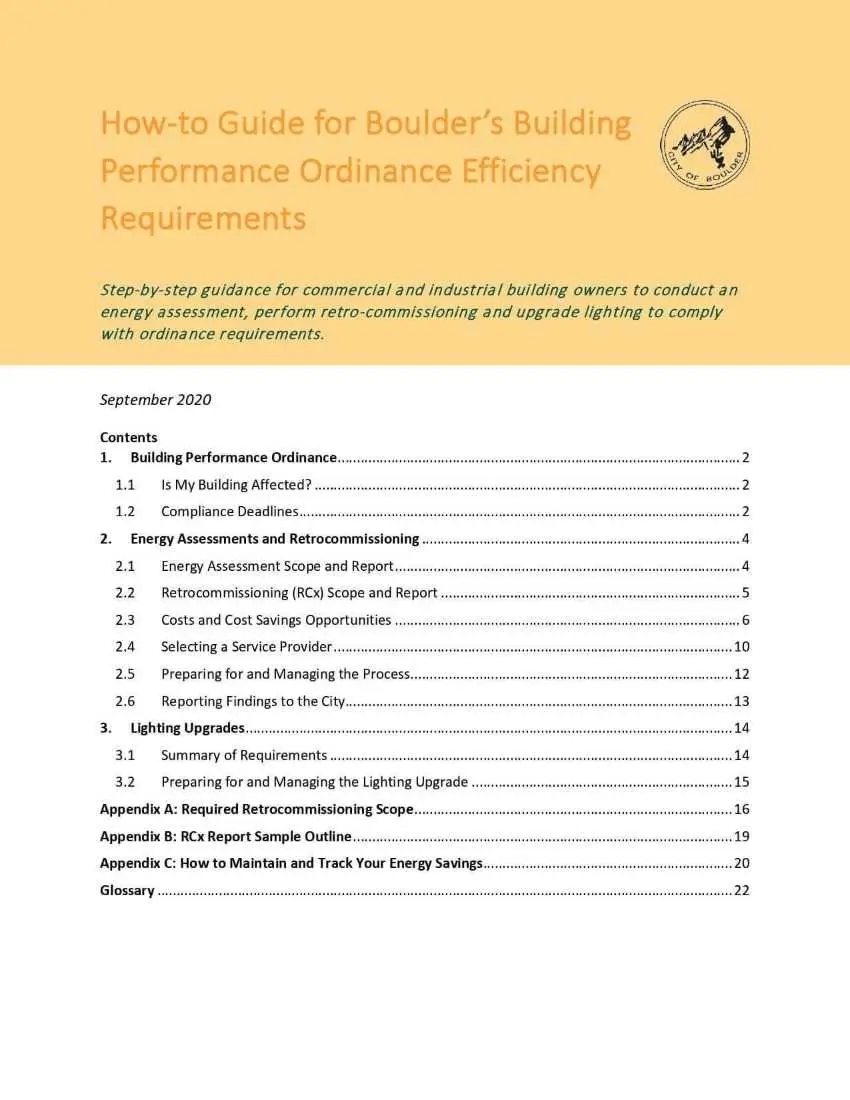
Discover how Boulder Colorado Building Performance Ordinance Efficiency Requirements supports energy efficiency, emissions reduction, and sustainable building practices. Download the report to stay ahead of regulatory requirements.



We deliver innovative energy management, demand response, and building automation solutions to enterprise, manufacturing, industrial, healthcare, hospitality, K-12, and higher education sectors across the United States and globally.
©2026 InTech Energy, Inc. DBA Sanalife. All rights reserved. Various trademarks held by their respective owners.