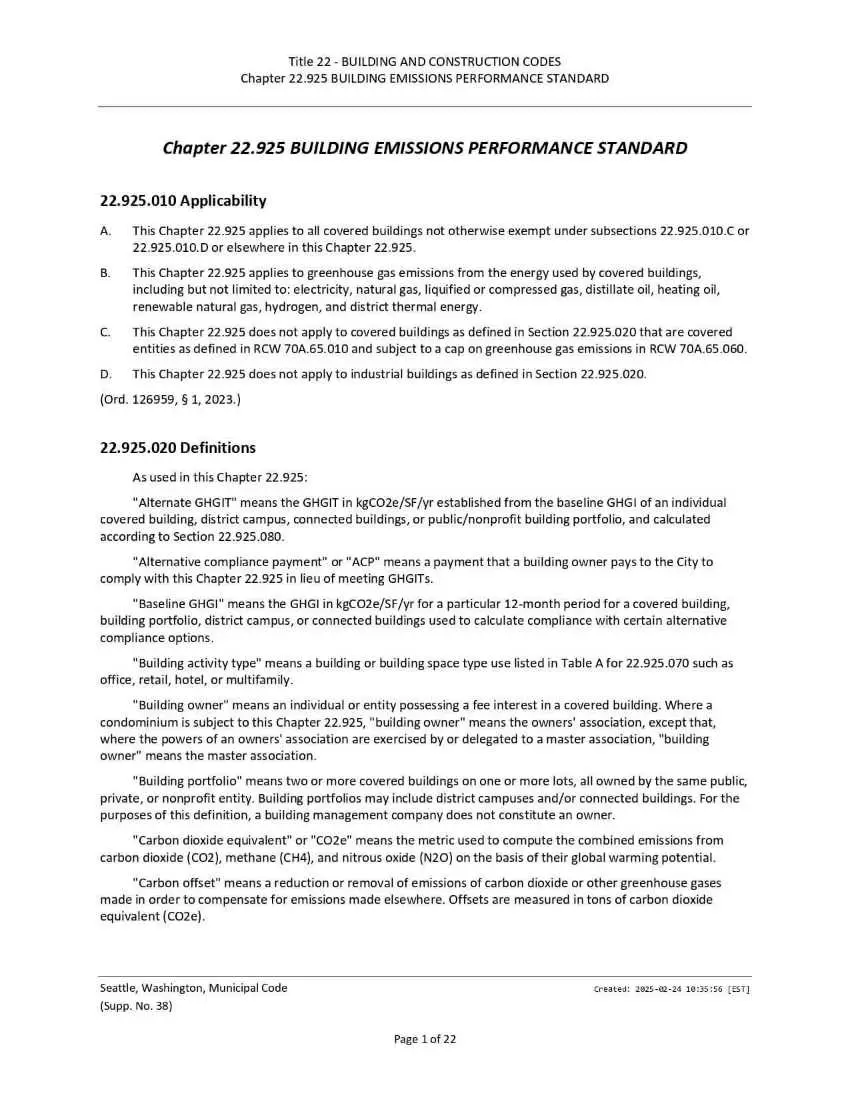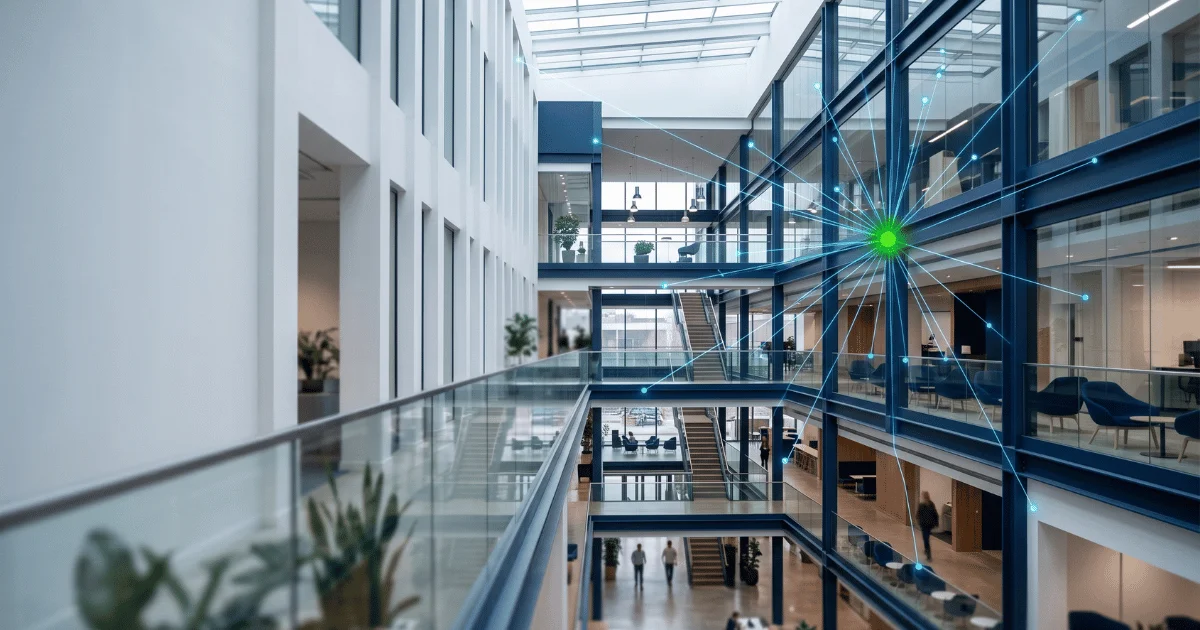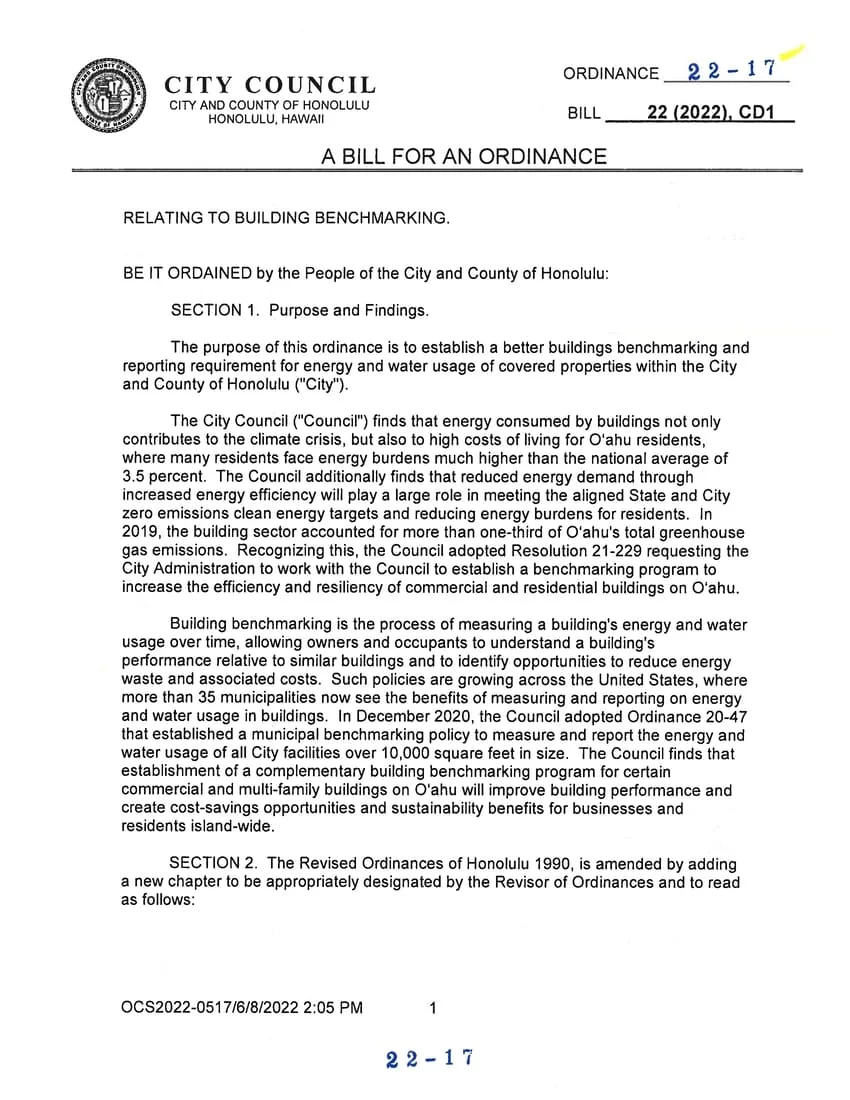



Seattle's updated Building Performance Standard requires commercial and multifamily buildings over 20,000 square feet to measure and report energy use. This guide explains who must benchmark, compliance requirements, and how tracking energy performance helps avoid penalties and cut costs.
Seattle has taken a major step toward reducing greenhouse gas emissions and improving building efficiency by strengthening its Building Performance Standard (BPS). The city’s benchmarking and energy efficiency regulations apply to nonresidential and multifamily buildings over 20,000 square feet, requiring them to track and report energy use annually.
If you own or manage a commercial property in Seattle, you must ensure your building complies with these new regulations to avoid penalties and take advantage of energy-saving opportunities. This guide breaks down the benchmarking requirements, compliance deadlines, and best practices for optimizing your building’s performance.
Seattle’s BPS regulation (Chapter 22.920) applies to a wide range of buildings based on their size and function.
Building owners must comply with nonresidential benchmarking standards if at least 50% of the gross floor area is used for nonresidential purposes. Similarly, buildings where more than 50% of the space is classified as multifamily must follow the multifamily benchmarking standards.

Seattle’s Building Performance Standard requires affected properties to:
Building owners must set up an account and input monthly energy data.
Reports must include accurate energy consumption data.
This includes checking meter readings and confirming utility data submissions.
Seattle’s energy efficiency requirements will become stricter over time.
Seattle’s Office of Sustainability & Environment (OSE) oversees compliance and may allow grace periods for reporting delays.
Seattle's benchmarking initiative is more than just a reporting requirement it’s a tool to improve building performance, reduce costs, and support sustainability efforts.

Seattle’s regulations may require additional energy reductions beyond benchmarking. Property owners should:
Seattle’s commitment to energy efficiency and carbon reduction will continue to evolve. Businesses must be prepared for:
By acting now, businesses can stay ahead of regulations, reduce costs, and improve operational efficiency while contributing to Seattle’s climate action goals.


We deliver innovative energy management, demand response, and building automation solutions to enterprise, manufacturing, industrial, healthcare, hospitality, K-12, and higher education sectors across the United States and globally.
©2026 InTech Energy, Inc. DBA Sanalife. All rights reserved. Various trademarks held by their respective owners.