


New York City's Local Law 97 sets carbon emission limits for buildings over 25,000 square feet, requiring major efficiency improvements by 2030 and 2050. This guide explains LL97 requirements, compliance deadlines, penalties, and strategies to reduce costs while staying ahead of regulatory change.
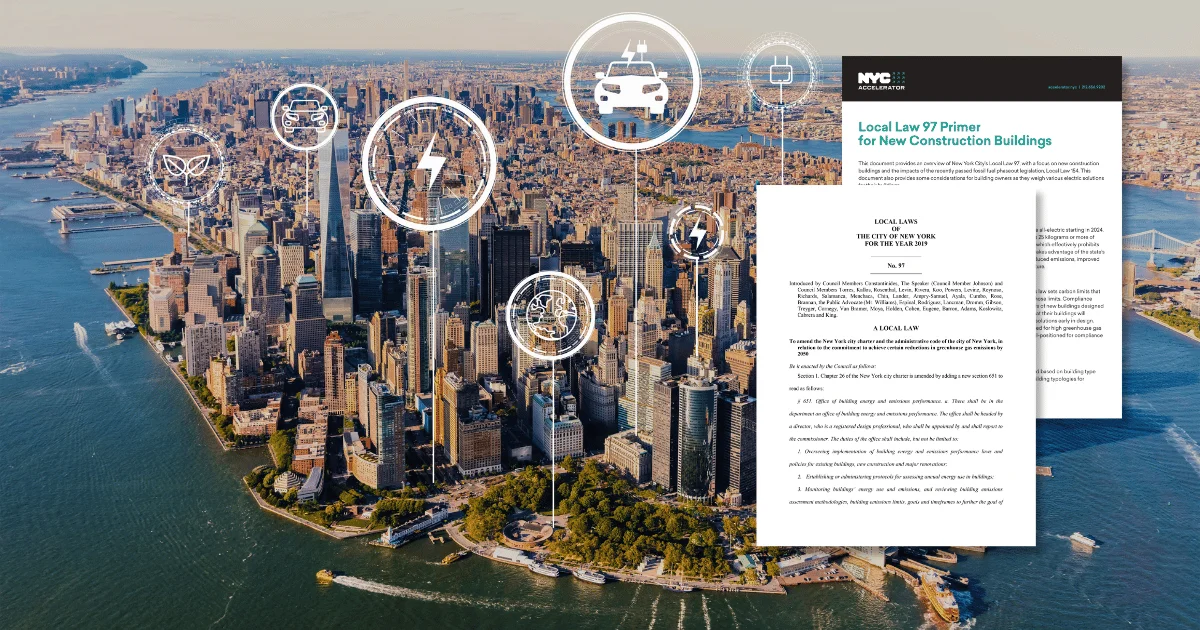
New York City is leading the charge on climate action with Local Law 97 (LL97), a key regulation under the Climate Mobilization Act that requires large buildings to cut greenhouse gas emissions. The law aims to reduce citywide emissions by 40% by 2030 and 80% by 2050, with strict performance targets that building owners must meet to avoid penalties.
As a business or property owner in New York City, understanding LL97’s regulations, compliance deadlines, and energy efficiency requirements is crucial. This guide will explain what LL97 entails, how it affects your building, and what steps you should take to stay compliant while optimizing energy performance.
LL97 applies to commercial and multifamily buildings over 25,000 square feet, as well as groups of buildings on the same tax lot or condo board that exceed 50,000 square feet collectively. The law mandates annual greenhouse gas emission limits, which become progressively stricter over time.
Buildings must meet specific carbon intensity limits, measured in metric tons of CO₂ equivalent per square foot, during the following compliance periods:

Building owners who fail to meet LL97’s emission thresholds face fines of $268 per metric ton of CO₂ equivalent over the limit. For example, a building exceeding its carbon cap by 10 metric tons would face an annual penalty of $2,680.
Avoiding these fines requires strategic planning, energy efficiency upgrades, and proactive emissions reduction strategies.
LL97 applies to:
Certain properties, such as houses of worship and some rent-regulated buildings, may qualify for alternative compliance pathways.
Tracking energy consumption is the first step toward meeting LL97’s emissions caps. Building owners should:
Energy efficiency measures help buildings reduce carbon emissions while cutting costs. Recommended upgrades include:
Buildings relying on natural gas or oil-based heating must start transitioning to electric-powered systems to stay compliant with future regulations. Key electrification steps include:
Electrification reduces reliance on fossil fuels, helping buildings future-proof their operations.

On-site and off-site renewable energy can help buildings meet LL97’s carbon limits. Strategies include:
Buildings that adopt renewable energy can significantly lower their carbon footprint while securing long-term energy cost savings.
LL97 is primarily focused on energy and emissions, but water conservation plays a role in sustainable building operations. Recommended steps include:
Efficient water use complements energy-saving initiatives, leading to lower utility costs and environmental benefits.
New York City and state agencies offer incentives to help building owners comply with LL97. Available programs include:
Accessing these programs can reduce the cost of LL97 compliance while improving building performance.

Buildings that fail to meet LL97’s carbon reduction targets will face significant financial penalties. Compliance helps eliminate unnecessary costs and legal risks.
Energy efficiency and electrification projects lower energy bills, providing long-term financial benefits. Upgrades to HVAC, lighting, and insulation can lead to substantial cost savings.
LL97 is just one step in New York City’s broader push for building decarbonization. Early compliance ensures buildings are prepared for stricter emissions limits in the future.
New York City’s Local Law 97 is one of the most ambitious building performance standards in the U.S. Businesses and property owners should act now to:
LL97 compliance is a critical opportunity to enhance building efficiency, reduce costs, and contribute to New York City’s decarbonization goals.


We deliver innovative energy management, demand response, and building automation solutions to enterprise, manufacturing, industrial, healthcare, hospitality, K-12, and higher education sectors across the United States and globally.
©2026 InTech Energy, Inc. DBA Sanalife. All rights reserved. Various trademarks held by their respective owners.